FLIA?
Flow Limitation in the Iliac Artery
Flow
Limitationsin the
Iliac
Artery

- Vascular conditions in athletes, better known internationally as FLIA ("Flow Limitations in the Iliac Artery").
- Narrowing (or compression) of the iliac artery occurs primarily in cyclists, speed skaters, and triathletes who train intensively and frequently with the hip in a flexed position. It can also occur in long-distance runners and rowers.
- When recognized at an early stage, modifying training habits and/or cycling position (increasing the hip angle) is often an effective solution.
- Symptoms typically include pain and/or loss of power in the leg during exercise above a certain intensity threshold. This is known as the symptom threshold and can be expressed in terms of cycling speed, heart rate, or power output measured with a power meter. A characteristic feature is that symptoms quickly improve when exercise intensity is reduced.
- A self-assessment tool has been developed to help athletes with leg complaints estimate their risk of iliac artery narrowing or compression as the underlying cause.
- In cases of severe iliac artery compression or narrowing, surgical treatment of the iliac artery may be considered.
- Approximately twenty percent of professional cyclists develop symptoms related to iliac artery vascular conditions during their careers and require treatment or specialist advice. The incidence among recreational cyclists is unknown, but cyclists who have trained for more than five years and average more than five hours per week are already considered to be at increased risk.
32
Years of experience
3000
Treated patients
400
Surgical interventions
94
Patient satisfaction
What is iliac artery narrowing, arterial kinking or endofibrosis (FLIA)?
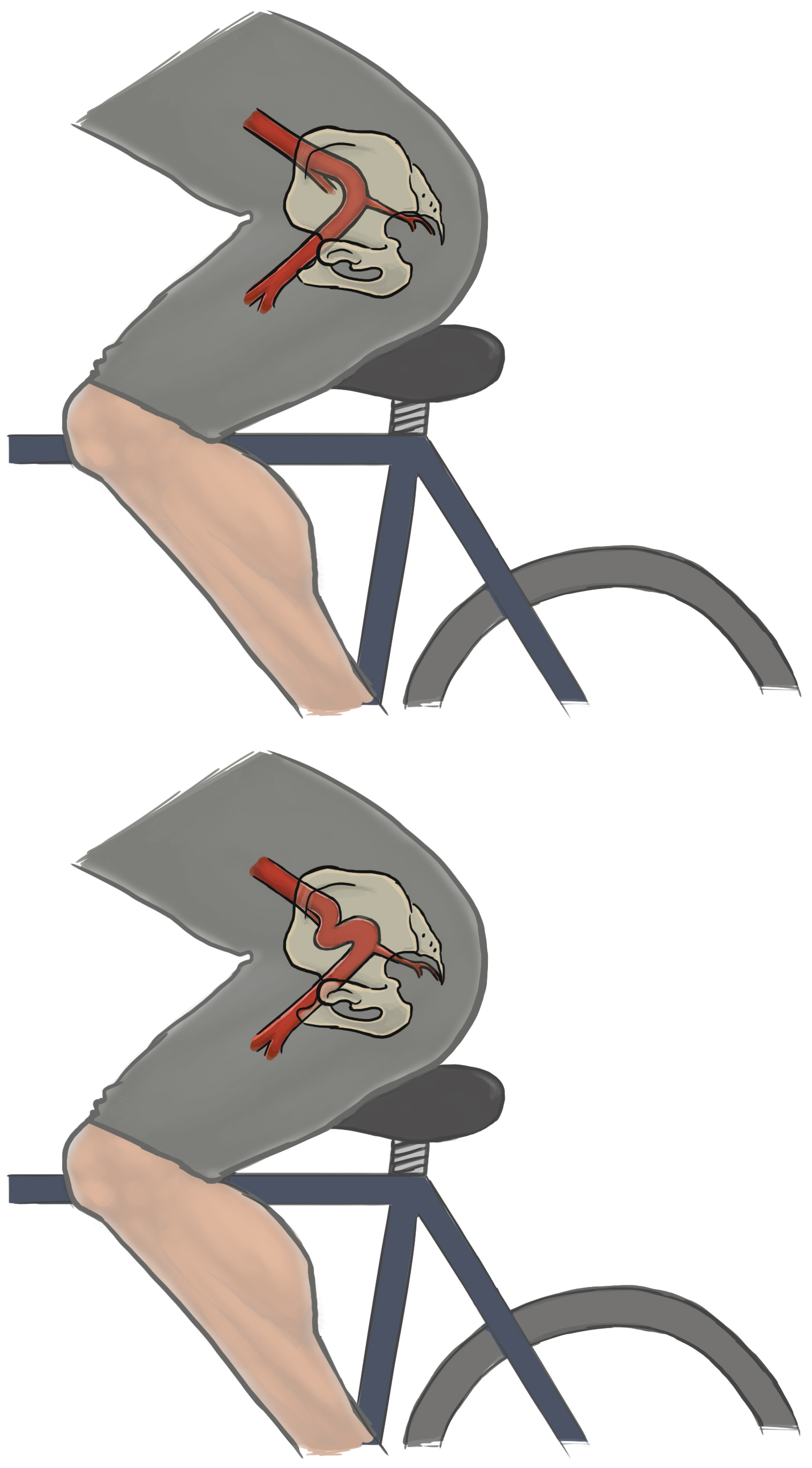
Your iliac artery supplies blood, and therefore oxygen, to the muscles of your legs. Due to the flexed position of the hip while cycling or speed skating, combined with the thousands of repetitive leg movements performed during training and competition, the iliac artery can repeatedly become kinked or compressed. This can be compared to a garden hose that is bent, restricting the flow of water and increasing flow velocity at the point of constriction. During intense exercise, this can result in an insufficient blood supply to the leg muscles. Over time, it may also lead to damage to the artery itself.
Reduced blood flow through the artery can cause a shortage of oxygen in the leg muscles, leading to a sensation of early fatigue and muscle acidosis. Athletes typically notice symptoms such as loss of power and pain in the affected leg. In many cases, one leg is affected more than the other, making it characteristic that one leg develops symptoms sooner than the other during exercise. Symptoms almost always improve within a few minutes of rest and can often be reproduced within minutes when exercise intensity exceeds the individual's ‘symptom threshold’. Unlike a muscle injury, the symptoms are usually not confined to a single muscle but involve multiple muscle groups.
These symptoms are often characteristic of a vascular condition. However, they may also be caused by a wide range of other medical conditions. It is therefore important to determine the true underlying cause of the symptoms and identify the most appropriate treatment approach. In otherwise healthy athletes, a vascular condition is often not the first diagnosis considered by healthcare professionals. For this reason, a self-check has been developed for both athletes and healthcare providers to help determine whether a vascular condition is likely and, if so, what the most appropriate next steps may be.
The average athlete with a vascular condition has cycled approximately 45,000 kilometres with symptoms and consulted multiple healthcare professionals before receiving the correct diagnosis. Unfortunately, this often results in unnecessary delays. The longer symptoms persist without appropriate evaluation, the greater the risk of permanent damage to the artery. When recognized early, modifying training habits, technique, posture, or equipment (for example, bicycle fit and position) may be sufficient to address the problem, and if surgery is required, a less invasive procedure may often be possible.
Preventing (further) iliac artery narrowing and/or arterial kinking

- Reduce training volume.
- Avoid an excessively aggressive cycling position (raise the handlebars, move the saddle forward, use shorter crank arms).
- Consider using a different type of bicycle (such as a hybrid or city bike, potentially with trekking handlebars). Avoid pulling up on the pedals and focus primarily on generating power through the downstroke.
- Adopt a more upright skating position and make a larger circular leg movement during the recovery phase, allowing greater hip extension.
- Particularly in athletes with leg symptoms suggestive of a vascular condition, it is important to establish whether iliac artery narrowing or arterial kinking is present and, if necessary, implement appropriate measures to prevent progression and/or consider surgical treatment.
Once the diagnosis has been established:
- Modify training to reduce the likelihood of triggering symptoms. This can be achieved by performing endurance training below the symptom threshold. Short interval training is also possible, consisting of 30-60 seconds of high-intensity effort followed by approximately 30 seconds of recovery, repeated in sets of 5-10 intervals. Interval sessions with durations between 3 and 15 minutes are generally discouraged, as they tend to provoke symptoms most strongly. Training modifications can have a substantial impact on symptom severity, as exercising above the symptom threshold with a vascular condition may cause significant additional overload-related symptoms in the affected leg that can persist for several days.
- Increase the hip angle during exercise.
- Stop participating in the sport that is causing the symptoms.
These measures can, of course, have a significant impact on your athletic activities. If you do not have a vascular condition, they may not be necessary or appropriate. Therefore, we recommend completing the self-check and, if indicated, having your symptoms evaluated by the healthcare professional recommended to determine the most appropriate approach for your individual situation.
Surgical treatment?
- If adjusting training position or equipment does not provide sufficient relief, and the arterial kinking is severe, surgical treatment may be considered.
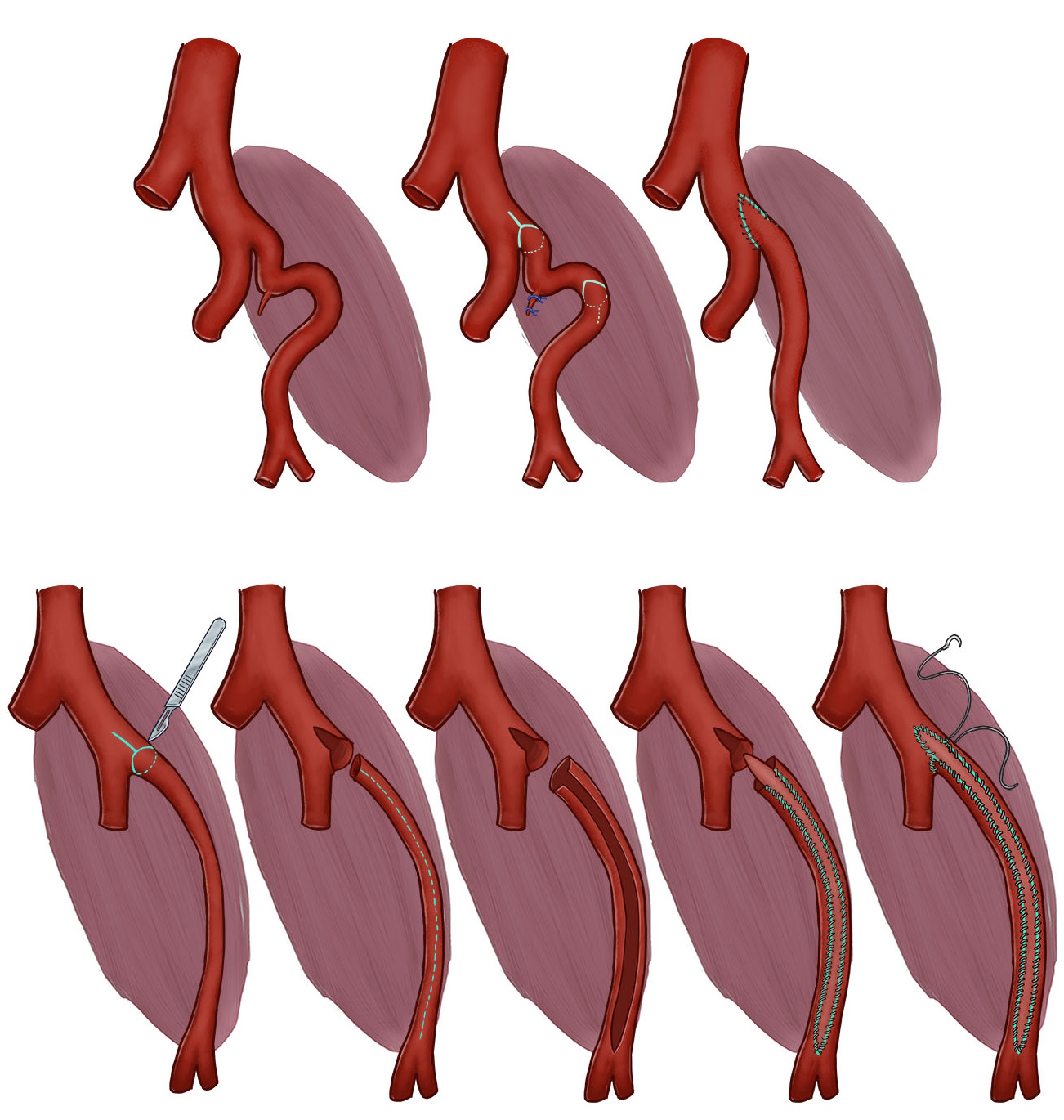
- In the early stages of iliac artery narrowing and arterial kinking, surgery may involve releasing the iliac artery from the surrounding tissues that restrict its normal movement.
- In more advanced stages, a more extensive vascular reconstruction may be required. In such cases, the artery is not only released but also repaired. If the iliac artery has become excessively elongated, it may be shortened surgically. If scar tissue has developed within the artery, the vessel can be widened using a patch of the patient's own vein. These vascular reconstruction procedures are more complex and carry additional risks.
Both the diagnostic evaluation and the surgical treatment of these vascular conditions require highly specialized, individualized care. For this reason, we are the only center in the Netherlands recognized with a Top Clinical Expertise Center designation for the diagnosis and treatment of these conditions.